
Unlocking the Potential: How to Recover Valuable Real Estate Sales Leads

In real estate, every enquiry holds potential. Yet, many agencies overlook the treasure trove of historical sales leads sitting idle in their databases. These leads, often forgotten or underutilised, can be revived to create meaningful opportunities. Recovering real estate sales leads is not just about chasing immediate sales; it’s about reconnecting with prospects, updating information, and understanding evolving needs. This approach builds stronger relationships and uncovers opportunities that might otherwise be missed.
This article explores what types of real estate sales leads can be recovered, why historical enquiries remain valuable, and how to effectively manage and reactivate these leads. It is designed for real estate agency owners, directors, principals, sales managers, and sales consultants seeking practical advice on maximising their existing lead assets. Compound Marketing Services specialises in Sales Lead Recovery, Lead Qualification, CRM Management, Database Reactivation, and Customer Re-engagement, and this post reflects that expertise.
What Is a Recoverable Real Estate Sales Lead?
A recoverable real estate sales lead is any previous enquiry or contact that has not resulted in a completed transaction but still holds potential for future engagement. These leads may have stalled due to timing, changes in circumstances, or incomplete follow-up. The key to recovery lies in having permission to contact the prospect and maintaining accurate records within a CRM or database.
Recoverable leads include:
Buyers who showed interest but did not purchase
Vendors who requested appraisals but did not list
Investors who paused their property search
Landlords and tenants with previous rental enquiries
The objective is to determine if these prospects remain active or have new needs. This requires thoughtful communication, updated data, and a clear understanding of each lead’s history.
Why Historical Enquiries Remain Valuable
Historical enquiries represent a warm audience. These prospects have already expressed interest in your services or properties, making them more receptive than cold leads. Their previous engagement shows intent, which can be reignited with the right approach.
Real estate decisions often take time. Buyers and sellers may delay action due to financial readiness, market conditions, or personal circumstances. Revisiting these leads can reveal changes that open new opportunities.
Moreover, maintaining contact with past enquiries helps build trust and brand recognition. When prospects are ready to act, they are more likely to choose an agent who has stayed in touch and demonstrated ongoing support.
Why Timing Is One of the Biggest Factors Affecting Property Decisions
Property decisions rarely happen overnight. Timing depends on many factors:
Financial readiness, such as saving for a deposit or securing finance
Market conditions, including interest rates and property availability
Personal circumstances like job changes, family needs, or relocation
Changes in investment goals or lifestyle preferences
Because timing varies widely, a lead that was inactive six months ago may be ready to engage today. Regularly reviewing and re-contacting historical leads ensures your agency stays front of mind when the timing aligns.
Why Buyers, Vendors, Landlords and Investors Often Return to the Market
People return to the property market for various reasons:
Buyers may have paused due to market uncertainty or personal finances but resume searching when conditions improve
Vendors might delay listing until they feel confident about pricing or market demand
Landlords often revisit rental opportunities or property management services as their portfolios grow or change
Investors adjust strategies based on market trends, seeking new opportunities or diversifying holdings
Understanding these motivations helps tailor your approach to each lead type, increasing the chance of successful re-engagement.
Why Existing CRM Databases Are Valuable Business Assets
A well-maintained CRM database is one of the most valuable assets for a real estate agency. It stores detailed information on leads, including contact details, enquiry history, property preferences, and communication records.
Benefits of a strong CRM include:
Efficient lead tracking and follow-up
Personalised communication based on past interactions
Identification of trends and lead behaviour over time
Ability to segment leads for targeted campaigns
Rather than focusing solely on new lead generation, investing time in cleaning, updating, and reactivating your CRM can yield higher returns with less cost.
The Benefits of Reactivating Historical Enquiries Instead of Relying Solely on New Lead Generation
New lead generation is essential but often expensive and competitive. Reactivating historical enquiries offers several advantages:
Lower acquisition costs since the leads are already in your system
Higher conversion rates due to prior engagement
Faster sales cycles as prospects are familiar with your agency
Improved customer relationships through ongoing communication
By balancing new lead generation with lead recovery, agencies can build a more sustainable and profitable sales pipeline.
How Different Types of Enquiries Can Be Recovered
Buyer Enquiries
Buyers who previously expressed interest but did not proceed can be contacted to check if their circumstances have changed. Update their property preferences and offer new listings matching their criteria. For example, a buyer who was looking for a three-bedroom home may now consider townhouses or units.
Vendor Enquiries
Vendors who requested appraisals but did not list can be approached to discuss current market conditions and revisit their selling goals. Sharing recent sales data and success stories can encourage them to relist.
Property Appraisal Requests
Appraisal requests indicate a vendor’s interest in understanding their property’s value. Follow up with updated appraisals and market insights to maintain engagement and offer listing services.
Home Valuation Enquiries
Similar to appraisal requests, home valuation enquiries provide an opportunity to reconnect with potential sellers. Regularly updating valuations and market trends keeps these leads informed and engaged.
Website Enquiries
Website enquiries often come from visitors seeking information or property details. Ensure these leads are promptly contacted and their needs recorded. Periodic follow-up can uncover renewed interest.
Realestate.com.au Enquiries
Leads generated from Realestate.com.au are valuable due to the platform’s wide reach. Track and update these leads in your CRM, then follow up with personalised communication based on their search behaviour.
Domain Enquiries
Domain enquiries function similarly to Realestate.com.au leads. Regular contact and tailored property suggestions help convert these prospects into clients.
Open Home Attendees
Open home visitors have shown active interest in a property. Follow up quickly to gather feedback, update their preferences, and offer alternative listings if needed.
Auction Enquiries
Auction attendees or bidders may not have secured a property but remain motivated buyers. Contact them to discuss other opportunities or upcoming auctions.
Investor Enquiries
Investors often have specific criteria and timelines. Regular check-ins to discuss market trends, rental yields, and investment opportunities keep these leads engaged.
Off-Market Buyer Databases
Off-market buyers prefer discreet transactions. Maintaining a database of these leads allows you to match them with suitable properties before public listing.
Rental Enquiries
Rental leads can convert into sales leads if tenants decide to buy or landlords seek to sell. Keep rental enquiries active with updates on market conditions and property availability.
Landlord Enquiries
Landlords may require property management or consider selling. Regular contact helps identify changes in their needs and potential sales opportunities.
Previous Clients
Past clients are a prime source of repeat business and referrals. Stay in touch with market updates, property news, and personalised check-ins.
Expired Real Estate Enquiries
Leads from expired listings often represent motivated sellers. Contact them to discuss relisting strategies and market changes since their last attempt.
Un-contacted or Partially Contacted Leads
Leads that were never fully contacted or only partially engaged should be reviewed and followed up with fresh communication to assess current interest.
Old Real Estate CRM Databases
Older CRM data can be revitalised by cleaning outdated information, segmenting leads, and launching targeted reactivation campaigns.
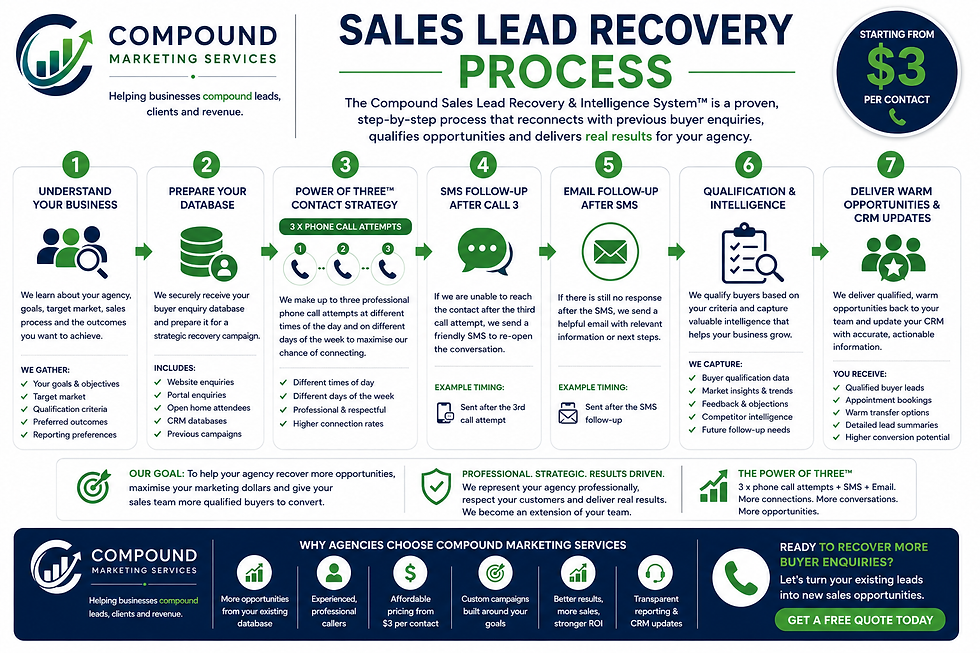
Practical Steps to Recover Real Estate Sales Leads
Audit Your Database
Review your CRM to identify leads that have not been contacted recently or have incomplete information.
Segment Leads by Type and Status
Group leads into categories such as buyers, vendors, investors, and expired listings for tailored communication.
Update Contact Information and Preferences
Reach out to confirm or update details, ensuring your records reflect current circumstances.
Develop a Re-engagement Plan
Create personalised messages based on lead history and market conditions. Use phone calls, emails, or SMS as appropriate.
Track Responses and Adjust Follow-up
Monitor engagement and adjust your approach based on feedback and lead behaviour.
Integrate Lead Recovery with Ongoing Marketing
Combine reactivation efforts with new lead generation and brand-building activities for a balanced strategy.
Final Thoughts on Lead Recovery in Real Estate
Recovering real estate sales leads is a practical and effective way to grow your business without relying solely on new enquiries. Almost any historical lead can be reactivated if you have permission to contact them and maintain accurate records. The goal is to reconnect, update information, and identify whether opportunities still exist.
By understanding the different types of enquiries and their unique characteristics, agencies can tailor their approach and improve conversion rates. Investing in CRM management and database reactivation not only saves costs but also strengthens client relationships and builds long-term value.
For real estate agencies looking to enhance their sales lead recovery process, focusing on these principles will unlock the potential hidden in their existing data and drive sustainable growth.
This content is for informational purposes only and does not constitute legal or financial advice.
If you would like to learn more about our services contact us today!



Comments