
How Much Do Sales Lead Recovery Services Cost in Australia Pricing Models and Value Guide

Missed leads rarely look expensive at first. A form enquiry sits unanswered, a quote request goes cold, a past customer is never followed up. The cost shows up later, when paid traffic, referrals, local search, or showroom visits fail to turn into booked work.
Businesses often ask, “How much do sales lead recovery services cost in Australia?” The short answer is that pricing usually falls into a few common models: per contact, per appointment, monthly retainers, performance-based pricing, or blended packages.
For a clear benchmark, Compound Marketing Services charges $3 per contact for Sales Lead Recovery, and from $8 per contact when appointment setting is included. That gives Australian businesses a simple way to estimate the cost of reactivating old, missed, or underworked leads.
The better question is not just “What is the cheapest price?” It is “What does each recovered opportunity cost, and what is a booked appointment worth?”

What sales lead recovery services usually include
Sales lead recovery is the process of contacting people who have already shown interest but did not convert. These leads may come from:
Website enquiry forms
Old quote requests
Missed calls
Abandoned booking forms
Past campaign lists
Lapsed customer databases
Event or showroom enquiries
CRM records with no clear outcome
Australian sales lead recovery services usually work across phone, SMS, email, and sometimes CRM notes. The aim is to find out whether the contact is still interested, qualify the opportunity, update the record, and move serious prospects to the next step.
That next step might be:
Booking a sales call
Setting an appointment
Sending an updated quote
Reconnecting the lead with a branch or franchise
Removing bad records from the database
Tagging the lead for future nurture
A good provider does more than “call a list”. They protect the customer experience, keep records clean, and help the business see which lead sources still have hidden value.
The main pricing models used in Australia
Sales lead recovery pricing varies because different providers take on different levels of work. Some simply make contact attempts. Others qualify leads, handle objections, set appointments, and report on outcomes.
Here are the most common pricing models.
Pricing model | How it works | Best suited to | Watch for |
Per contact | A fixed cost for each contact supplied or worked | Businesses with a clear lead list and defined process | Check what counts as a “contact” |
Per appointment | You pay for appointments booked or qualified | Sales teams that only want calendar-ready leads | Quality rules must be clear |
Monthly retainer | A set monthly fee for ongoing recovery work | Businesses with regular enquiry volume | Make sure activity and reporting are defined |
Pay per outcome | Cost is tied to a result, such as a booked call or sale | Higher-ticket services with clear tracking | The base price is often higher |
Blended pricing | A mix of per-contact pricing plus appointment setting | Teams that need both list clean-up and bookings | Compare total cost per qualified opportunity |
Per-contact pricing gives the clearest starting point
Per-contact pricing is common because it is simple. If a business has 1,000 unworked leads, it can estimate the project before it starts.
With Compound Marketing Services, the baseline is clear:
Sales Lead Recovery costs $3 per contact
Sales Lead Recovery with appointment setting starts from $8 per contact
That means a list of 500 contacts would cost $1,500 for recovery activity at $3 per contact, before any extras or special requirements. If appointment setting is included from $8 per contact, the same list would start from $4,000.
The value depends on conversion rates and average sale value. For example, if a recovered appointment is worth hundreds or thousands of dollars in potential revenue, the per-contact cost may be small compared with the missed opportunity.
Appointment setting costs more because the work is deeper
Appointment setting usually costs more than basic recovery because it requires more skill and time. The provider has to confirm interest, ask qualifying questions, handle objections, and find a suitable time.
It may also involve:
Calendar coordination
Reminder messages
Lead notes for the sales team
Qualification based on location, budget, timing, or need
Follow-up after no answer or no reply
This is why “from $8 per contact” can still be cost-effective. The service is not just checking whether someone answers. It is trying to turn a dormant lead into a real sales conversation.

What affects the cost of lead recovery
Two providers can quote very different prices for what sounds like the same service. The difference often comes down to the quality of the data, the difficulty of the follow-up, and the level of reporting needed.
Lead age and lead intent change the amount of work
A lead from last week is usually easier to recover than a lead from 18 months ago. Recent enquiries remember the reason they contacted the business. Older leads may have moved on, bought elsewhere, or forgotten the interaction.
Lead intent matters too. Someone who requested a quote is usually warmer than someone who downloaded a guide or entered a competition.
Warmer leads often cost less to recover in practice because they require fewer attempts and less explanation.
Data quality can raise or lower the real cost
A low per-contact price does not help much if the list is full of wrong numbers, duplicate records, missing names, or unclear enquiry notes.
Good data helps the recovery team work faster and sound more relevant. Poor data creates friction.
Before comparing quotes, check whether the provider will:
Remove duplicates
Flag disconnected numbers
Update wrong or missing details
Record contact outcomes
Segment leads by interest or status
Return usable notes to the business
Clean reporting has value because it stops the same bad leads being chased again later.
Contact channels affect price
Phone calls take more time than SMS or email, but they can also produce richer outcomes. SMS can work well for quick reactivation, appointment confirmation, and “are you still interested?” style follow-up.
A lower-cost service may use fewer channels. A higher-cost service may combine call, SMS, and email sequences.
The right mix depends on the offer. High-value services, home improvement quotes, finance-related enquiries, education bookings, health-adjacent services, and automotive enquiries often benefit from a more careful contact process.
Compliance and customer experience matter in Australia
Any lead recovery activity in Australia should respect consent, privacy, and contact preferences. Businesses need to think about the Spam Act, the Privacy Act, the Do Not Call Register, and their own consent records.
This article is general information only, not legal advice. If a list is old or the consent status is unclear, seek advice before contacting people at scale.
A cheap campaign can become expensive if it damages trust. The tone of the call or message should feel helpful, not pushy.
Reporting depth affects the fee
Basic reporting may only show how many contacts were attempted and how many answered. Better reporting shows what happened and what to do next.
Useful reporting may include:
Contacted
No answer
Wrong number
Not interested
Still considering
Wants a quote
Appointment booked
Needs follow-up later
Already purchased elsewhere
This helps sales teams focus on live opportunities. It also helps marketing teams see which lead sources produced real demand.
How Compound Marketing Services prices lead recovery
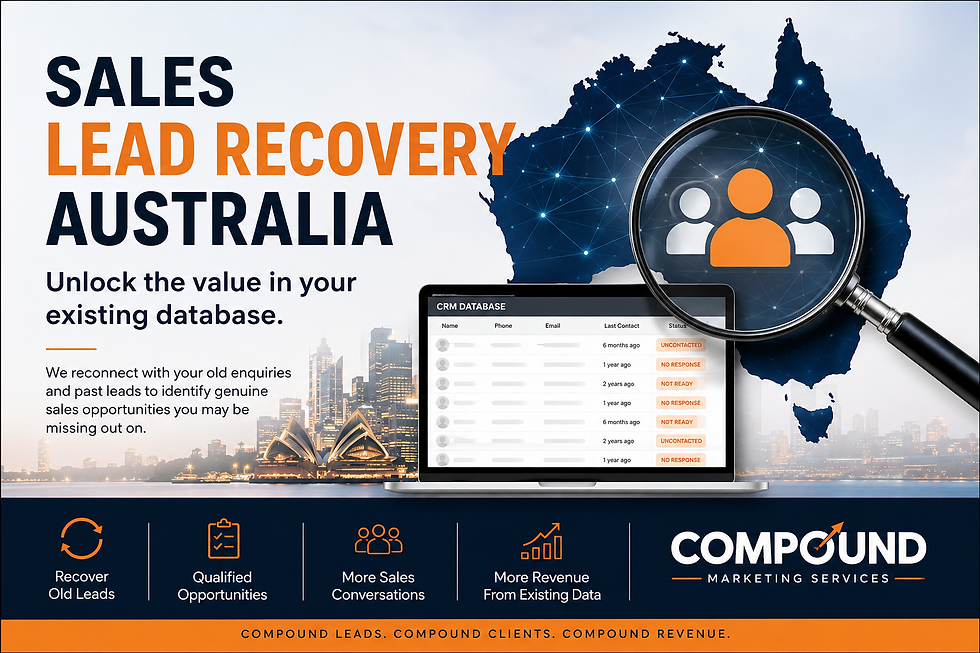
Compound Marketing Services uses a clear per-contact model for Australian businesses that want to recover missed or ageing leads.
Service | Pricing | What it is designed for |
Sales Lead Recovery | $3 per contact | Reconnecting with old, missed, or underworked leads |
Sales Lead Recovery with appointment setting | From $8 per contact | Recovering leads and helping book sales appointments |
This pricing works well when a business has a database of contacts and wants a predictable project cost.
For example:
Number of contacts | Sales Lead Recovery at $3 per contact | With appointment setting from $8 per contact |
250 | $750 | From $2,000 |
500 | $1,500 | From $4,000 |
1,000 | $3,000 | From $8,000 |
Ask whether pricing includes GST, reporting, script development, CRM updates, SMS costs, and follow-up attempts. These details can change the final quote.
The Power of Three™ approach helps compare value
Price is easier to compare when the work has a clear structure. Compound Marketing Services refers to its Power of Three™ approach, which can be understood as a practical way to assess lead recovery across three core areas.
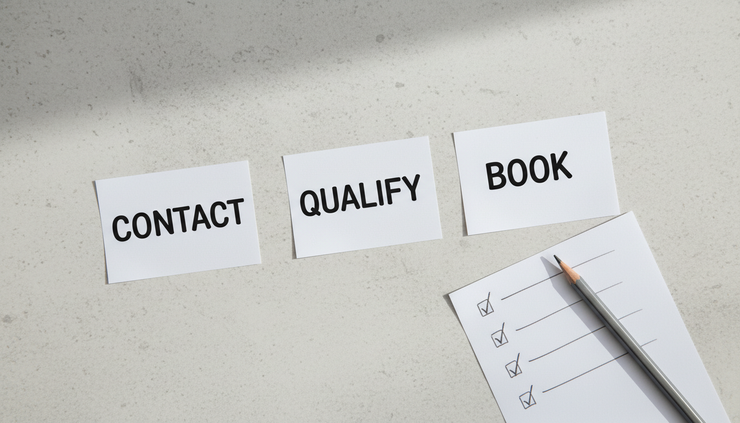
Contact the right people with the right message
Lead recovery works best when the message matches the original enquiry. A person who asked for a quote should not receive a generic sales pitch. A past customer should not be treated like a cold prospect.
The first part of the Power of Three™ approach is about relevance. Better context improves response rates and protects the brand experience.
Qualify the opportunity before handing it over
A recovered lead is only useful if the sales team knows what to do next. Qualification helps separate curious contacts from people with a real need.
Useful qualification can include timing, location, service fit, purchase stage, and preferred next step.
Convert interest into a clear next action
The final part is turning interest into action. That may mean booking an appointment, sending the right information, or setting a follow-up date.
This is where appointment setting adds value. It reduces the gap between “Yes, I’m still interested” and a real sales conversation.
How to compare sales lead recovery quotes
A cheap quote may be good value, but only if it includes enough work to create real outcomes. A higher quote may be better value if it produces more qualified conversations and cleaner data.
When comparing Australian sales lead recovery services, ask these questions.
What counts as one contact
Some providers charge for every record supplied. Others charge only for records attempted. Some may treat duplicate records differently.
Get this in writing before work starts.
How many contact attempts are included
One call attempt is not the same as a recovery sequence. Ask how many times the provider will try, which channels they will use, and over what period.
A simple campaign may include one or two attempts. A stronger campaign may include multiple attempts across phone and SMS.
What happens when someone shows interest
This is where many projects lose value. If the provider finds an interested lead but the handover is slow or unclear, the opportunity can go cold again.
Ask whether interested leads are:
Sent live to the sales team
Added to a calendar
Updated in the CRM
Sent by daily report
Prioritised by urgency
How appointment quality is defined
If paying for appointment setting, define a valid appointment in plain language.
A valid appointment might need:
Correct contact details
Confirmed interest
Service area fit
A real need or enquiry
A booked date and time
Agreement to speak with the business
This avoids disputes and helps both sides measure success.
What reporting is provided
The final report should help the business make better decisions. It should show more than activity volume.
Good reporting helps answer:
Which old leads still have interest?
Which lead sources produced poor-quality contacts?
Which offers created the most recoverable demand?
Why did people fail to convert the first time?
How many contacts should be removed or updated?
How to judge value instead of just price
The simplest value metric is cost per recovered opportunity.
Use this formula:
`Total campaign cost ÷ number of qualified opportunities = cost per recovered opportunity`
For appointment setting, use:
`Total campaign cost ÷ number of valid booked appointments = cost per appointment`
Then compare that figure with the average value of a sale, your close rate, and the cost of generating a brand-new lead.
If new leads cost more to create than old leads cost to recover, recovery should be part of the sales process. It can also reveal which campaigns, branches, salespeople, or systems are letting opportunities slip away.
For many businesses, the hidden win is not only extra sales. It is learning where the lead handling process broke in the first place.

FAQs about sales lead recovery service costs in Australia
How much do sales lead recovery services cost in Australia?
Common pricing varies by provider and scope. Some charge per contact, some charge per appointment, and others use monthly retainers. Compound Marketing Services charges $3 per contact for Sales Lead Recovery and from $8 per contact with appointment setting.
Is per-contact pricing better than pay-per-appointment pricing?
Per-contact pricing is easier to forecast when you have a known database. Pay-per-appointment pricing can suit businesses that only want booked conversations, but the appointment rules must be clear. The best choice depends on lead quality, sales value, and how much control you want over the process.
What types of leads can be recovered?
Common examples include missed calls, old quote requests, website enquiries, abandoned booking forms, lapsed customers, and CRM records with no final outcome. The best leads usually have a clear enquiry reason and recent contact history.
Does appointment setting cost more than basic lead recovery?
Yes. Appointment setting usually costs more because it includes qualification, scheduling, and a stronger handover to the sales team. Compound Marketing Services prices this from $8 per contact.
How should I measure whether lead recovery is worth it?
Track cost per qualified opportunity, cost per appointment, conversion rate, and revenue from recovered leads. Also review the data clean-up value, such as removed duplicates, updated contact records, and better lead source feedback.
The best price is the one tied to a clear outcome
Sales lead recovery should not be judged on price alone. A $3 contact that identifies real sales opportunities can be worth far more than a cheaper call attempt with poor notes and no next step.
For Australian businesses with missed, ageing, or underworked enquiries, Compound Marketing Services offers a simple starting point: $3 per contact for Sales Lead Recovery, or from $8 per contact with appointment setting.
The value comes from what happens next. Contact the right people, qualify real interest, and turn that interest into a clear sales action. That is where recovered leads become recovered revenue.

Comments