
Unlocking Real Estate Success: The Power of Identifying Buyers' Preferred Suburbs

Understanding which suburbs buyers are interested in can transform real estate sales. Buyers’ preferences often shift due to lifestyle changes, market trends, or new opportunities. Real estate agencies that track and update these preferences can connect buyers with the right properties faster, improve client satisfaction, and increase sales success. This post explores why suburb preferences change, how expanding search areas creates opportunities, the importance of qualifying buyers, and how keeping CRM data current boosts marketing efforts. We also introduce the Compound Sales Lead Recovery & Intelligence System™ as a tool to keep suburb preferences fresh and actionable.

Suburb preferences evolve as buyers seek different lifestyles and amenities.
Why Buyers’ Suburb Preferences Often Change
Buyers rarely stick to one fixed suburb throughout their property search. Their preferences shift for several reasons:
Lifestyle changes: A growing family may prioritize schools and parks, while young professionals might seek proximity to nightlife or public transport.
Market conditions: Rising prices or new developments in certain suburbs can push buyers to explore alternatives.
Work location shifts: Changes in job location or remote work options influence commute times and preferred areas.
Community vibe: Buyers may discover new suburbs that better match their desired community feel or amenities.
Budget adjustments: Financial situations can change, leading buyers to widen or narrow their search radius.
For example, a couple initially interested in a central suburb may shift to an outer suburb for more space and affordability once they start a family. Recognizing these shifts early helps agents tailor their approach and avoid wasting time on unsuitable listings.
How Changing Search Areas Create New Opportunities
When buyers expand or change their suburb preferences, it opens doors for agencies to:
Present fresh listings: New suburbs mean new properties that might better fit the buyer’s evolving needs.
Spot emerging markets: Some suburbs gain popularity quickly due to infrastructure projects or lifestyle appeal.
Build stronger relationships: Showing understanding of buyers’ changing needs builds trust and loyalty.
Increase sales chances: Matching buyers with the right suburb speeds up decision-making and reduces lost leads.
For instance, a buyer who broadens their search from one suburb to three nearby areas gives the agent more options to find the perfect home. This flexibility can lead to quicker sales and happier clients.
Why Agencies Should Qualify Buyers Thoroughly
Qualifying buyers means gathering detailed information about their preferences, financial situation, and motivations. This process is crucial because:
It clarifies suburb priorities: Knowing which suburbs a buyer truly prefers helps focus property searches.
It reveals flexibility: Understanding if buyers are open to alternatives can expand opportunities.
It identifies urgency: Buyers ready to move quickly require different handling than those casually browsing.
It prevents wasted effort: Agents avoid showing unsuitable properties or chasing unlikely leads.
Effective qualification involves asking questions like:
Which suburbs are you most interested in and why?
Are you open to nearby suburbs with similar features?
What is your budget range and financing status?
What are your must-have amenities or lifestyle factors?
By qualifying buyers well, agents can tailor their service and improve the chances of closing a sale.
How Updating CRM Data Improves Future Marketing
Customer Relationship Management (CRM) systems store buyer information, but data quickly becomes outdated if not maintained. Keeping suburb preferences current in the CRM benefits agencies by:
Enabling targeted marketing: Sending relevant listings and updates based on the latest preferences increases engagement.
Improving lead nurturing: Timely follow-ups with updated info keep buyers interested.
Supporting data-driven decisions: Agencies can analyze trends in suburb demand to adjust strategies.
Saving time and resources: Accurate data reduces chasing cold leads or irrelevant contacts.
For example, if a buyer’s preferred suburb changes from Suburb A to Suburb B, updating the CRM ensures they receive listings and market news for Suburb B only. This relevance boosts the chance of a sale.
Introducing the Compound Sales Lead Recovery & Intelligence System™
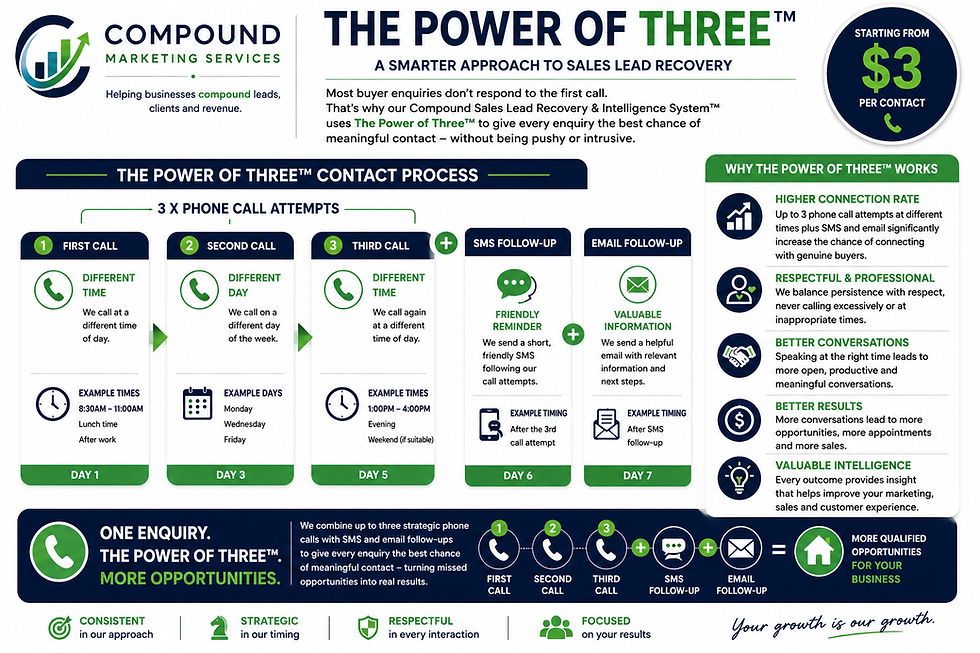
The Compound Sales Lead Recovery & Intelligence System™ is designed to keep suburb preferences and buyer data fresh and actionable. It works by:
Automatically tracking buyer interactions: Monitoring emails, calls, and property views to detect changes in preferences.
Prompting agents to update CRM records: Alerts when suburb interests shift or new information emerges.
Analyzing data patterns: Identifying trends in buyer behavior to suggest new suburbs or property types.
Recovering lost leads: Re-engaging buyers who may have gone quiet by offering updated suburb options.
This system helps agencies stay ahead of buyer needs, improving responsiveness and sales outcomes.
Practical Example: How One Agency Increased Sales by Tracking Suburb Preferences
A mid-sized real estate agency noticed many buyers changed their suburb preferences during the search. They implemented a process to:
Qualify buyers with detailed suburb questions.
Update CRM data weekly based on buyer feedback.
Use the Compound Sales Lead Recovery & Intelligence System™ to monitor changes.
Within six months, the agency saw a 25% increase in closed sales and a 40% reduction in time spent on unsuitable listings. Buyers appreciated the personalized service and relevant property suggestions.
Best Practices for Agencies to Identify and Use Buyer Suburb Preferences
Ask suburb preference questions early and often: Preferences can change, so check regularly.
Use technology to track and analyze data: CRM systems and intelligence tools save time and improve accuracy.
Train agents to qualify buyers thoroughly: Clear communication uncovers true needs.
Segment marketing campaigns by suburb interest: Tailored emails and alerts increase engagement.
Follow up on lost or inactive leads: Updated suburb info can revive interest.
Tracking and updating buyers’ preferred suburbs is not just a data task. It’s a strategic approach that connects buyers with homes they love and helps agencies close more deals efficiently. Using tools like the Compound Sales Lead Recovery & Intelligence System™ ensures preferences stay current and actionable, turning shifting buyer interests into sales opportunities.
If you want to improve your real estate sales, start by asking your buyers: Which suburb are you interested in now? Keep that answer updated, and watch your success grow.
If you are interested in finding out more about our Sales Lead Recovery Services please contact us today!



Comments