
Understanding the Importance of Buyer Budget Insights in Real Estate Sales

In real estate, knowing a buyer’s current budget is more than just a number on paper. It shapes every step of the sales process, from property selection to closing the deal. When agents understand the financial boundaries and flexibility of their buyers, they can tailor their approach, avoid wasted time, and increase the chances of a successful sale. This post explores why buyer budgets change, how finance, equity, and market conditions affect these budgets, best practices for qualification, and why keeping pricing information updated in a CRM is crucial. Along the way, we’ll introduce how Compound Marketing Services supports agencies with Sales Lead Recovery to improve lead qualification and boost sales outcomes.

Why Buyer Budgets Change Over Time
Buyer budgets are not fixed. Several factors can cause shifts in what a buyer is willing or able to spend:
Changes in personal finances: Income fluctuations, job changes, or unexpected expenses can increase or decrease a buyer’s available funds.
Market conditions: Rising interest rates or changes in lending policies can affect borrowing power, altering the maximum price buyers can afford.
Equity from existing properties: Buyers who own homes may gain or lose equity depending on market trends, impacting their down payment or trade-in value.
Emotional factors: Sometimes buyers adjust budgets based on lifestyle priorities, family needs, or new information about neighborhoods.
For example, a buyer initially targeting a $500,000 home might lower their budget after a rate hike increases monthly mortgage payments. Conversely, a seller who gains equity from a recent sale might raise their budget to afford a larger or better-located property.
Understanding these dynamics helps agents stay aligned with buyers’ real-time financial situations and avoid showing properties outside their reach.
The Impact of Finance, Equity, and Market Conditions
Financial factors play a central role in shaping buyer budgets:
Mortgage qualification: Lenders assess income, debts, credit scores, and down payment size to determine loan eligibility. Changes in any of these can affect the loan amount.
Interest rates: Even small rate changes can significantly alter monthly payments, influencing how much buyers can comfortably afford.
Home equity: Buyers who sell or refinance existing homes may unlock equity that increases their purchasing power.
Market trends: In a seller’s market, prices rise quickly, sometimes pushing buyers to stretch budgets or reconsider options. In a buyer’s market, prices may fall, allowing buyers to get more value for their money.
For instance, during periods of rising interest rates, buyers often need to adjust budgets downward or seek properties with lower price tags. Agents who monitor these trends can advise clients proactively, helping them make informed decisions.
Best Practices for Buyer Qualification
Properly qualifying buyers is essential to understanding their budget and readiness to purchase. Here are some effective practices:
Ask direct questions about budget and financing: Don’t hesitate to inquire about pre-approval status, down payment size, and maximum comfortable monthly payment.
Verify financial documentation: Request pre-approval letters, proof of income, and credit reports when appropriate to confirm buyer claims.
Discuss flexibility: Understand if buyers have wiggle room in their budget or if they are firm on price limits.
Update information regularly: Buyers’ situations can change quickly, so revisit budget discussions throughout the process.
Use CRM tools to track buyer data: Maintain detailed records of buyer budgets, preferences, and qualification status for easy reference and follow-up.
By following these steps, agents can focus on properties that match buyers’ financial profiles, improving efficiency and client satisfaction.
Why Agencies Should Regularly Update Pricing Information in Their CRM
Real estate markets move fast. Prices fluctuate, new listings appear, and buyer preferences evolve. Keeping pricing information current in a Customer Relationship Management (CRM) system offers several advantages:
Accurate matching: Agents can quickly identify properties that fit buyer budgets without wasting time on outdated listings.
Improved communication: Up-to-date data helps agents provide timely advice and set realistic expectations.
Better lead qualification: When pricing and buyer information are current, agencies can prioritize leads more effectively.
Data-driven decisions: Agencies can analyze trends and buyer behavior to refine marketing and sales strategies.
Regular updates prevent missed opportunities and help maintain trust with buyers by showing professionalism and responsiveness.
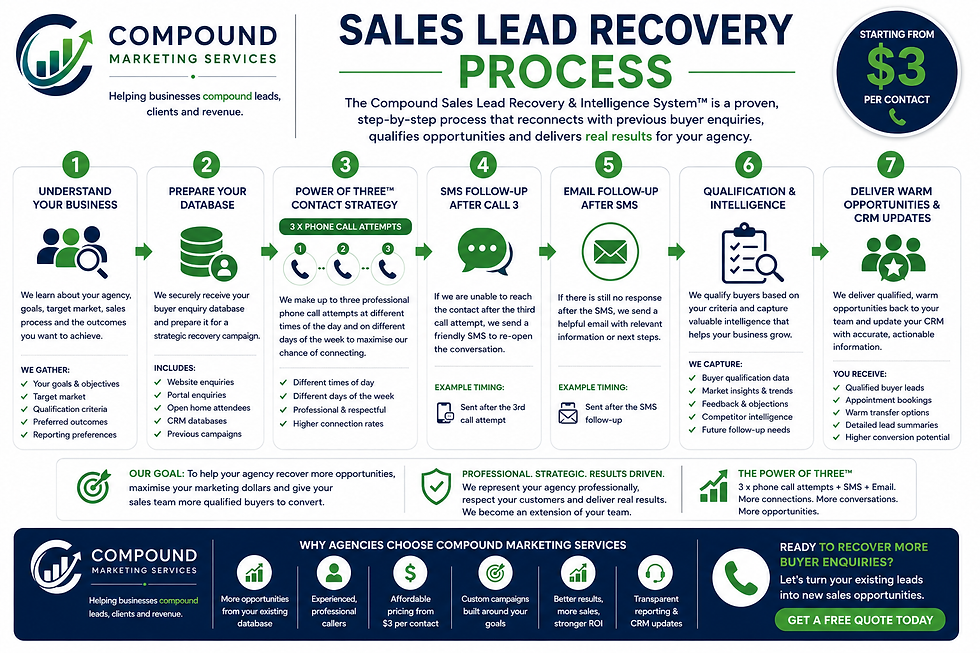
How Compound Marketing Services Supports Lead Qualification with Sales Lead Recovery
Compound Marketing Services offers tools designed to enhance lead qualification and recovery. Their Sales Lead Recovery service helps agencies:
Identify and re-engage cold or lost leads: Automated follow-ups and targeted messaging bring buyers back into the conversation.
Verify and update buyer information: Ensures budgets and contact details are current, improving lead quality.
Streamline lead management: Integrates with CRM systems to centralize data and track buyer progress.
Increase conversion rates: By focusing on qualified leads, agents spend time more efficiently and close more deals.
Using services like Sales Lead Recovery allows agencies to maintain a clear picture of buyer budgets and readiness, supporting better sales outcomes.
Practical Tips for Agents to Understand Buyer Budgets Better
Schedule regular check-ins: Set reminders to revisit budget discussions with buyers every few weeks or after major market changes.
Educate buyers on financing: Help clients understand how interest rates and loan terms affect affordability.
Use budgeting tools: Share calculators or apps that let buyers experiment with different price points and payment scenarios.
Encourage transparency: Create a trusting environment where buyers feel comfortable sharing financial updates.
Leverage CRM notes: Document all budget-related conversations and changes to keep the whole team informed.
Real-Life Example: How Budget Insights Led to a Successful Sale
A real estate agent was working with a couple initially approved for a $400,000 loan. After a sudden interest rate increase, their pre-approval dropped to $370,000. The agent quickly updated the CRM and adjusted property recommendations accordingly. Using Sales Lead Recovery, the agent reconnected with the couple after they secured a larger down payment, raising their budget back to $410,000. This timely information allowed the agent to present a new listing that matched their updated budget, leading to a successful purchase within weeks.
Understanding a buyer’s current budget is essential for real estate agents aiming to close deals efficiently and build lasting client relationships. Budgets change due to personal finances, market shifts, and financing conditions. Agents who qualify buyers thoroughly and keep pricing data updated in their CRM can respond quickly to these changes. Tools like Compound Marketing Services’ Sales Lead Recovery further improve lead qualification by keeping buyer information fresh and actionable.
For agencies looking to improve sales outcomes, focusing on buyer budget insights is a practical step that saves time, reduces frustration, and increases success rates. Start by asking clear questions, verifying financial details, and using technology to stay organized. This approach turns budget knowledge into a powerful advantage in real estate sales.
If you are interested in finding out more about our Sales Lead Recovery Services contact us today!



Comments