
How Old Can Sales Leads Be? Is There an Age Limit?

Understanding the Lifespan of Sales Leads and Why Age Shouldn't Deter Your Strategy
Sales leads are often seen as fresh or stale, valuable or worthless, based on their age. Many businesses assume that older leads have little to no value, leading them to focus solely on generating new enquiries. This approach overlooks a crucial reality: the age of a sales lead does not determine its potential. Instead, factors like changing business needs, budgets, personal circumstances, and timing play a far greater role in whether a lead converts.
This article explores why there is no fixed age limit for sales leads and why businesses should treat their CRM databases as long-term assets. We will cover practical insights into lead qualification, CRM management, database reactivation, and sales lead recovery, with examples from industries such as real estate, solar, home improvements, trades, mortgage broking, finance, insurance, and legal services.
Is There an Age Limit for Sales Leads?
No universal age limit exists for sales leads. A lead generated six months ago, a year ago, or even several years ago can still convert into a sale. The key is understanding that purchasing decisions depend on many factors beyond the initial enquiry date.
For example, a homeowner who requested a quote for solar panels two years ago might not have had the budget or motivation at the time. Today, with rising energy costs and new government incentives, that same lead could be ready to proceed.
Sales leads are not perishable goods. Their value fluctuates with changing circumstances, making it essential to revisit and reassess older leads regularly.
Why Businesses Often Assume Older Leads Have No Value
Many businesses discard or ignore older leads because they believe these contacts are no longer interested. This assumption often stems from:
Pressure to meet short-term sales targets
Limited resources to follow up on all leads
Misunderstanding of buyer behaviour
Lack of effective CRM management
This mindset leads to missed opportunities. Older leads may simply be in a different stage of their buying journey or waiting for the right moment.
Timing Is One of the Biggest Factors Affecting Sales Conversions
Timing influences purchasing decisions more than lead age. A prospect might say "not now" due to:
Budget constraints
Internal approval processes
Market conditions
Personal circumstances
For example, a small business owner considering new office fit-outs might delay due to cash flow issues but revisit the enquiry when finances improve.
Understanding timing helps sales and marketing teams tailor follow-ups and nurture leads patiently rather than writing them off prematurely.
Why "Not Now" Rarely Means "Never"
When prospects delay purchasing, it often reflects temporary barriers, not a lack of interest. Common reasons include:
Waiting for budget approval
Prioritising other projects
Researching options
Changes in leadership or decision-makers
In the mortgage broking industry, clients might postpone refinancing due to fluctuating interest rates or personal financial changes. Regular contact keeps your business top of mind when they are ready.
How Circumstances Change Over Time
Business needs and personal situations evolve. A lead that was irrelevant months ago might become highly relevant later. Examples include:
A homeowner delaying renovations due to family changes
A company postponing IT upgrades during restructuring
A client waiting for regulatory changes before purchasing insurance
By recognising these shifts, businesses can maintain relationships and adapt their approach accordingly.
Why Historical Enquiries Remain Valuable Business Assets
Every enquiry holds data that can inform future sales efforts. Historical leads provide:
Insights into customer preferences
Patterns in buying behaviour
Opportunities for targeted marketing
A foundation for personalised communication
Ignoring this data wastes potential. Instead, businesses should view their CRM as a repository of valuable information to nurture over time.
Why CRM Databases Are Often Underutilised
Many businesses collect leads but fail to use their CRM systems effectively. Common issues include:
Poor data hygiene and outdated contacts
Lack of segmentation and prioritisation
Infrequent follow-ups
Limited integration with sales processes
This underuse means missed chances to reactivate dormant leads or identify new opportunities within existing data.
Why Businesses Should Avoid Making Assumptions About Inactive Enquiries
Inactive leads are often labelled as "cold" or "dead" without proper qualification. This can happen because:
No recent contact attempts were made
Leads were not nurtured with relevant content
Sales teams focused only on new leads
Instead, businesses should regularly review and re-engage inactive leads to uncover hidden potential.
How Regular Customer Follow-Up Improves Lead Qualification
Consistent follow-up helps clarify a lead’s current status and readiness to buy. Benefits include:
Identifying changes in needs or budgets
Building trust and rapport
Gathering updated information
Moving leads through the sales funnel
For example, a trades business following up on a quote for home renovations can learn if the project timeline has shifted or if additional services are needed.
The Importance of CRM Management
Effective CRM management is critical to maintaining lead quality and maximising conversion rates. Key practices include:
Regularly updating contact information
Segmenting leads by industry, interest, or stage
Automating reminders for follow-ups
Tracking communication history
These steps ensure no lead is overlooked and that sales teams have the information needed to engage prospects effectively.
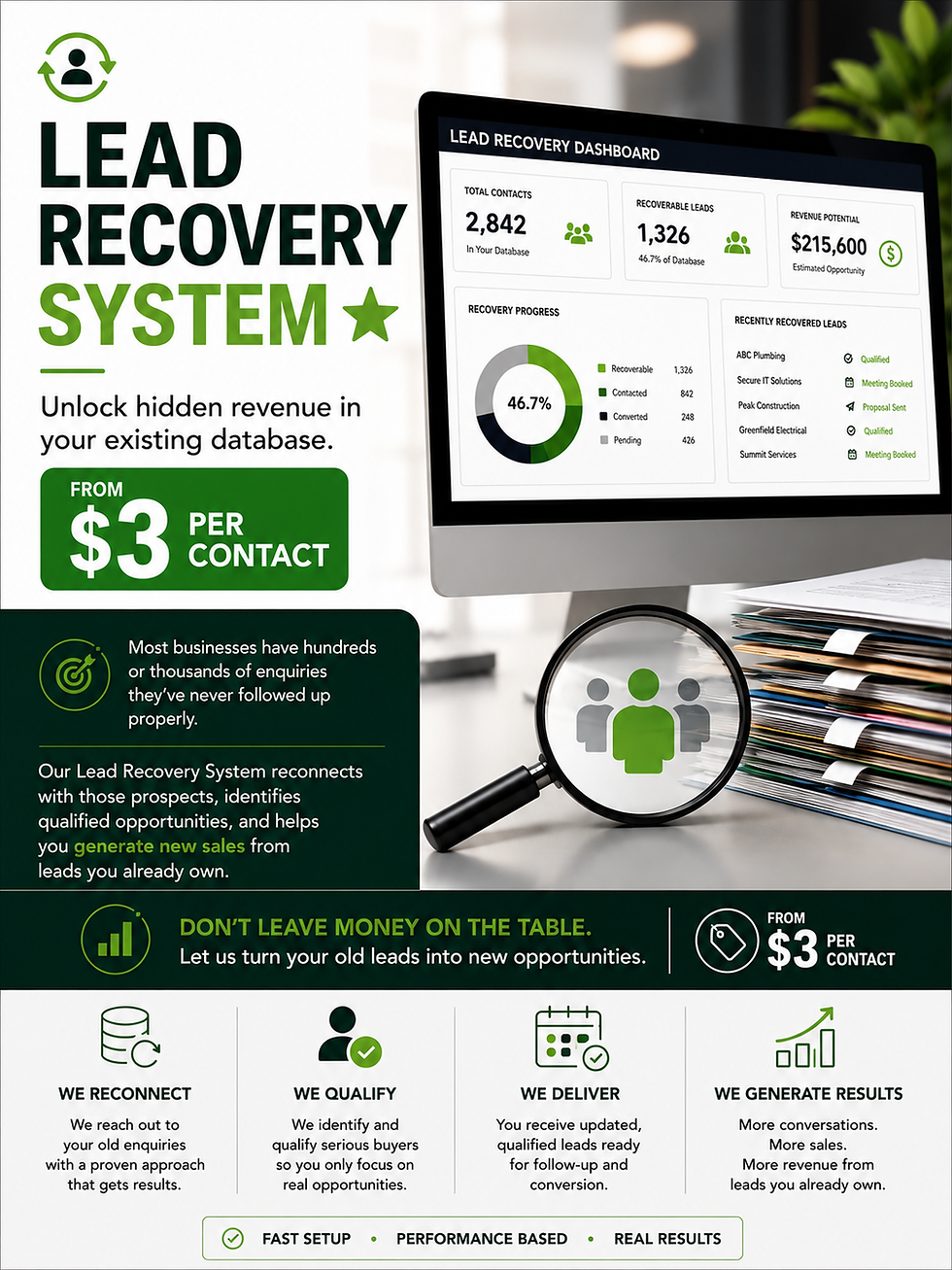
Why Database Reactivation Uncovers Hidden Opportunities
Reactivation campaigns target dormant leads with tailored messaging to spark renewed interest. This approach can:
Reveal prospects ready to buy after a pause
Re-engage contacts who forgot about your services
Generate sales without the cost of new lead acquisition
In the insurance sector, reactivation emails reminding clients about policy reviews often lead to upsells or renewals.
Why Sales Lead Recovery Often Delivers a Stronger Return on Investment Than Continually Generating New Leads
Recovering existing leads is generally more cost-effective than acquiring new ones. Reasons include:
Lower marketing spend
Shorter sales cycles
Higher conversion rates due to prior interest
Better use of existing data
For example, a solar company that recontacts leads from previous years may close sales faster than chasing cold prospects.
How Recovering Existing Opportunities Complements Lead Generation Rather Than Replacing It
Lead recovery should be part of a balanced sales strategy. While new leads bring fresh prospects, recovering older leads:
Maximises the value of past marketing efforts
Provides a steady pipeline of warm leads
Supports sustainable growth
Both approaches work best when integrated into a comprehensive CRM and sales process.
Why Businesses Should Treat Their CRM as a Long-Term Business Asset Rather Than Simply a Contact Database
A CRM is more than a list of names. It is a strategic tool that:
Stores valuable customer history
Enables personalised communication
Supports data-driven decision-making
Enhances customer experience
Investing time and resources into CRM management pays dividends by unlocking ongoing sales opportunities.
Practical Examples from Multiple Industries
Real Estate: Buyers often revisit property enquiries months after initial contact due to market changes or personal circumstances. Regular follow-up helps agents stay informed and ready.
Solar: Rising energy prices and government rebates can turn old leads into active customers when conditions improve.
Home Improvements: Renovation plans may be delayed but not abandoned. Tradespeople benefit from checking in periodically.
Trades: Seasonal demand or project timing affects when leads convert. Maintaining contact ensures readiness.
Mortgage Brokers: Interest rate fluctuations and financial situations cause clients to delay refinancing. Follow-up uncovers new opportunities.
Finance: Business owners may postpone loans or investments but return when conditions are favourable.
Insurance: Policyholders often reconsider coverage at renewal or after life changes. Reactivation campaigns boost retention.
Legal Services: Clients may delay legal action due to costs or timing but remain prospects for future needs.
Sales leads do not expire simply because time passes. Their value depends on understanding the evolving needs and circumstances of prospects. By managing CRM data effectively, regularly following up, and reactivating dormant leads, businesses across industries can unlock hidden opportunities and improve sales outcomes.
Treat your CRM as a long-term asset and integrate lead recovery with ongoing lead generation to build a stronger, more resilient sales pipeline. This approach ensures no opportunity is lost due to assumptions about lead age.
If you want to explore how to recover and reactivate your sales leads effectively, consider partnering with experts who specialise in CRM management and lead qualification. This investment can deliver measurable returns and support sustainable business growth.
If you would like to learn more about our Sales Lead Recovery camapigns contact us today!



Comments