
Sales Lead Recovery for Psychiatrists | Compound Marketing Services

Maximize Your Patient Base with Sales Lead Recovery for Psychiatrists
Psychiatrists often receive a steady stream of patient enquiries through various channels: website forms, phone calls, online booking requests, specialist and GP referrals, and mental health assessment requests. Yet, many of these valuable leads go cold. Patients may delay seeking care due to long wait times, changing life circumstances, financial concerns, uncertainty about treatment, or simply intending to book later but never following through.
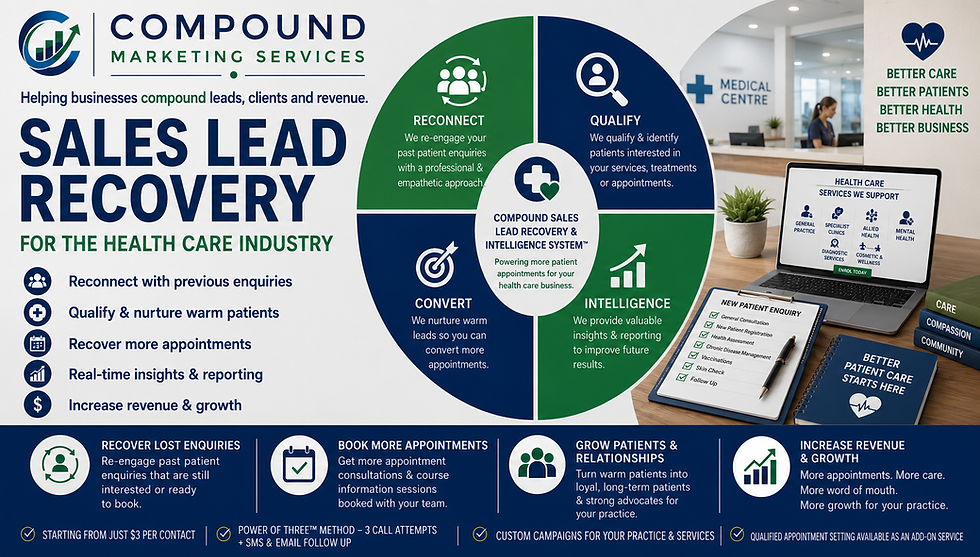
At Compound Marketing Services, we understand these challenges deeply. Our Compound Sales Lead Recovery & Intelligence System™ is designed specifically to reconnect with those previous patient enquiries, helping you with Sales Lead Recovery for Psychiatrists catch missed opportunities and grow your practice efficiently.
Why Psychiatrists Accumulate Valuable Patient Enquiries
Psychiatric practices often gather enquiries related to a wide range of services, including:
ADHD assessments
Autism assessments
Anxiety and depression consultations
Bipolar disorder and PTSD treatment
Medication reviews
Adult, child, and adolescent psychiatry
General psychiatric consultations
These enquiries come from multiple sources: website contact forms, phone calls, online booking platforms, specialist and GP referrals, and even previous patients who discontinued treatment or never booked an appointment.
Many potential patients hesitate to commit immediately. They might be waiting for the right time, dealing with financial constraints, or unsure about the treatment process. This delay creates a gap where enquiries go unconverted, and your practice misses out on consultations.
How Our Sales Lead Recovery System Works
Our Compound Sales Lead Recovery & Intelligence System™ reconnects with your previous patient enquiries in a professional, respectful manner. We reach out to determine if they are still seeking psychiatric care, update their records, and identify new consultation opportunities that might otherwise be overlooked.
We use our Power of Three™ Sales Lead Recovery Method, which involves contacting each lead up to three times through different channels to maximise response rates. This method ensures we engage with patients who may have missed or ignored initial contact attempts.
Our campaigns start from just $3 per contact, making this a cost-effective way to increase your bookings and improve your return on marketing investment.

Benefits of Sales Lead Recovery for Psychiatrists
Implementing a sales lead recovery system offers several advantages for psychiatric practices:
Increase consultation bookings
Re-engaging previous enquiries turns cold leads into confirmed appointments.
Improve return on marketing investment
Maximise the value of your existing enquiries without spending more on new leads.
Reduce missed opportunities
Follow up with patients who intended to book but never did.
Enhance patient database quality
Update and verify patient information for more accurate records.
Re-engage inactive enquiries
Bring back patients who discontinued treatment or delayed booking.
Strengthen patient relationships
Show patients you care by maintaining communication and support.
Generate more appointments from existing databases
Unlock hidden potential within your current contacts.
Examples of Lead Recovery in Psychiatric Services
Our system has successfully recovered enquiries across a broad spectrum of psychiatric needs:
ADHD and autism assessments
Many patients or parents delay booking assessments due to uncertainty or wait times. We reconnect and clarify their current needs.
Anxiety, depression, bipolar disorder, and PTSD consultations
Patients often hesitate before committing to treatment. Our follow-ups help them take the next step.
Medication reviews
Patients who stopped or paused medication can be reminded of the importance of regular reviews.
Adult, child, and adolescent psychiatry
We tailor our communication to suit different patient groups and their unique concerns.
General psychiatric consultations
We ensure no enquiry is left unattended, increasing your overall appointment numbers.
Optional Qualified Appointment Setting Service
For psychiatric practices wanting a more hands-off approach, we offer Qualified Appointment Setting as a customised service. We book consultations directly into your practice management system or calendar, saving your staff time and ensuring a seamless patient experience.
This service complements our lead recovery campaigns and helps you convert enquiries into confirmed appointments quickly and efficiently.
Frequently Asked Questions
How soon after an enquiry do you start the recovery process?
We recommend starting within a few weeks to maintain relevance and increase the chance of conversion.
Is patient confidentiality maintained during lead recovery?
Absolutely. We follow strict privacy guidelines and communicate professionally to protect patient information.
Can you tailor the recovery messages for different psychiatric services?
Yes, we customise our communication to reflect the specific service and patient needs.
What if a patient is no longer interested?
We update your records accordingly, helping you maintain an accurate and clean database.
How do you measure the success of lead recovery campaigns?
We provide detailed reports on response rates, updated contacts, and booked consultations.
Maximising your patient base starts with reconnecting those valuable enquiries that might otherwise be lost. Our Compound Sales Lead Recovery & Intelligence System™ offers a practical, affordable way to increase bookings, improve patient relationships, and get more from your existing database.
Contact us today to learn how we can help your psychiatric practice grow through effective sales lead recovery. Let’s turn your enquiries into appointments and support more patients on their mental health journey.
Disclaimer: This content is for informational purposes only and does not constitute medical advice. Always consult with qualified health professionals for diagnosis and treatment.

Comments