
How Old Can Real Estate Sales Leads Be? Is There an Age Limit?

The Hidden Value of Old Real Estate Sales Leads: Why Age Shouldn't Be Your Only Metric
Real estate agencies often face a common dilemma: how valuable are old sales leads? Many assume that leads older than a few months have lost their potential, leading to neglected databases and missed opportunities. Yet, property decisions rarely follow a strict timeline. Life circumstances, market conditions, and personal priorities shape when buyers, vendors, investors, and landlords re-engage with the market. This article explores why the age of a lead should not be the sole factor in deciding its worth and how real estate businesses can unlock hidden value through effective lead recovery, qualification, CRM management, and database reactivation.

Why Many Real Estate Agencies Assume Older Leads Have No Value
It is common for agencies to discard or ignore leads that have been inactive for months or years. This assumption stems from the belief that property buyers and sellers act quickly or not at all. Agencies often prioritise fresh leads, focusing on immediate conversions and overlooking the potential in their existing CRM databases.
This approach overlooks the reality that property decisions are rarely linear. Buyers may delay purchases due to financial reasons, vendors might wait for market conditions to improve, and investors often take years before re-entering the market. Disregarding older leads means missing out on clients who are simply in a different phase of their property journey.
Why Buying, Selling, and Investing Decisions Are Often Delayed
Property transactions involve significant financial and emotional commitment. Many factors influence the timing of these decisions:
Financial readiness: Buyers may need time to save for a deposit or improve credit scores.
Market conditions: Vendors might wait for better prices or more favourable interest rates.
Personal circumstances: Changes such as job relocation, family growth, or health issues can delay decisions.
Investment strategy: Investors often hold properties for years before buying or selling again.
These delays mean that leads can remain dormant for extended periods before becoming active again.
Common Reasons Buyers Postpone Purchasing
Buyers frequently delay their property purchase for reasons including:
Saving for a larger deposit: Rising property prices can extend saving periods.
Waiting for interest rates to drop: Mortgage rates heavily influence affordability.
Uncertainty about job security: Stable income is crucial for loan approval.
Family planning: Some buyers wait until their family situation changes.
Market observation: Buyers may watch the market for price trends before committing.
For example, a first-home buyer who enquired 18 months ago might only now be ready to proceed after securing a promotion and saving enough for a deposit.
Common Reasons Vendors Delay Listing
Vendors also postpone selling for various reasons:
Market timing: Waiting for a seller’s market to maximise returns.
Emotional attachment: Difficulty letting go of a family home.
Renovations or repairs: Delays caused by preparing the property for sale.
Relocation timing: Aligning sale with moving dates.
Financial considerations: Settling mortgage or tax obligations.
A vendor who initially contacted an agency two years ago might now be motivated to sell due to a job transfer or downsizing.
Why Investors and Landlords Often Return to the Market Years Later
Investors and landlords typically have longer investment horizons. They may:
Hold properties for rental income: Selling only when market conditions are favourable.
Reinvest profits: Using capital gains to purchase new properties.
Adjust portfolios: Responding to changes in tax laws or investment goals.
React to life changes: Retirement, inheritance, or financial restructuring.
For instance, a landlord who made an enquiry five years ago might now seek to expand their portfolio after a positive market shift or tax incentive.
Why Old Enquiries Can Become New Opportunities
Old leads represent potential clients who have already expressed interest. Their prior engagement means:
Familiarity with your agency: They know your brand and services.
Pre-qualified interest: They have a genuine need or curiosity.
Opportunity for tailored communication: You can customise follow-ups based on past interactions.
Reactivating these leads can be more cost-effective than generating new ones, as the groundwork has already been laid.
Why Every CRM Database Should Be Viewed as a Business Asset
Your CRM database is more than a contact list. It is a repository of potential revenue and client relationships. Treating it as a business asset means:
Regularly updating and cleaning data: Ensuring accuracy and relevance.
Segmenting leads by status and interest: Allowing targeted communication.
Tracking interactions and outcomes: Improving lead qualification.
Investing in lead recovery strategies: Maximising return on existing contacts.
Ignoring this asset risks losing valuable opportunities and weakening your competitive position.
The Risks of Ignoring Historical Enquiries
Neglecting old leads can lead to:
Lost sales opportunities: Clients may turn to competitors.
Wasted marketing investment: Past efforts go unused.
Damaged reputation: Lack of follow-up can harm client perception.
Incomplete market insights: Missing trends from client behaviour.
For example, a lead who enquired about investment properties three years ago might have since purchased elsewhere due to lack of contact.
Why the Age of a Lead Is Less Important Than the Customer’s Current Circumstances
A lead’s value depends on their present situation, not when they first made contact. Life changes can quickly turn a dormant lead into an active client. Understanding this means:
Avoiding assumptions based on lead age alone.
Focusing on updated information about client needs.
Using CRM data to track changes in contact details, preferences, and status.
This approach ensures your agency remains relevant and responsive.
Why Businesses Should Avoid Making Assumptions About Inactive Enquiries
Assuming inactive leads are dead leads limits growth. Instead:
Reach out with personalised messages.
Offer new information or market updates.
Invite feedback on their current property goals.
Use surveys or calls to re-engage.
Many leads respond positively when approached thoughtfully, revealing new opportunities.
The Importance of Regularly Updating CRM Records
Keeping CRM data current is essential for effective lead management. This includes:
Verifying contact details.
Recording changes in client circumstances.
Tracking communication history.
Noting client preferences and objections.
Regular updates improve lead qualification and increase conversion chances.
How Structured Customer Follow-Up Improves Lead Qualification
A systematic follow-up process helps identify which leads are ready to act. Benefits include:
Prioritising high-potential leads.
Understanding client motivations and barriers.
Building trust and rapport over time.
Reducing wasted effort on unqualified leads.
For example, a sales consultant who follows up quarterly can detect when a buyer’s financial situation improves, signalling readiness to purchase.
The Role of Database Reactivation in Uncovering Hidden Opportunities
Database reactivation involves targeted campaigns to re-engage dormant leads. Techniques include:
Email newsletters with market insights.
Personalised phone calls or SMS.
Exclusive offers or events invitations.
Surveys to update client needs.
These efforts often reveal clients ready to move forward, increasing sales without the cost of new lead generation.
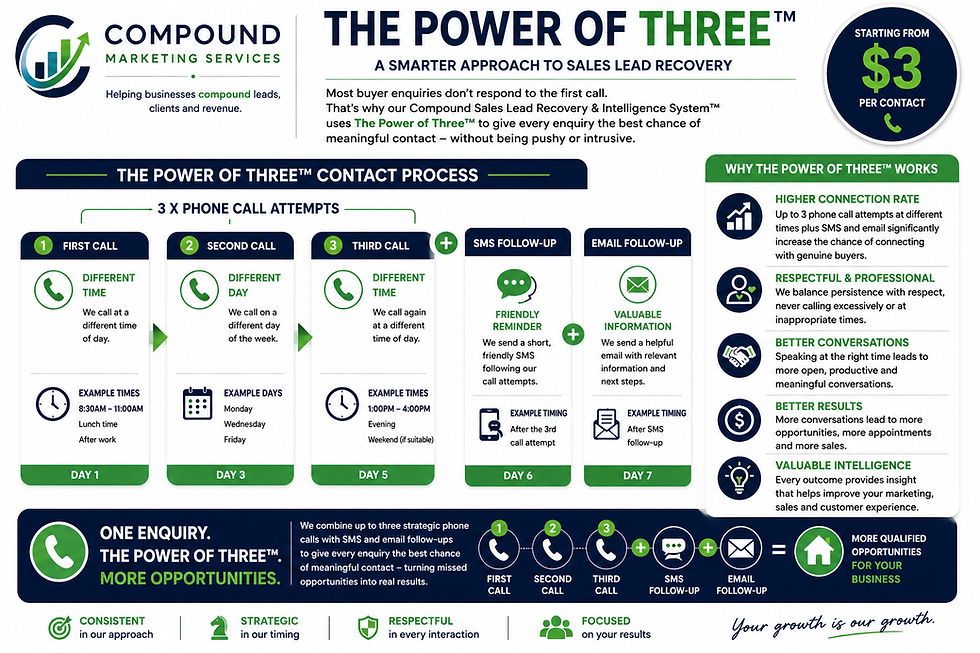
Why Sales Lead Recovery Often Produces a Better Return on Investment Than Continually Generating New Leads
Recovering old leads can be more efficient because:
Lower acquisition costs: Existing contacts require less marketing spend.
Higher conversion rates: Prior interest indicates genuine potential.
Faster sales cycles: Clients are already familiar with your agency.
Stronger client relationships: Ongoing engagement builds loyalty.
For example, agencies that invest in lead recovery report up to 30% higher conversion rates compared to cold lead generation.
Practical Examples of Clients Re-Entering the Market After Months or Years
Buyer example: A couple who enquired about family homes 24 months ago finally purchased after their second child was born and they needed more space.
Vendor example: A retiree who contacted an agency three years prior decided to downsize after their children moved out.
Investor example: A landlord who held a property for seven years reached out to buy a second investment after receiving a tax break.
Landlord example: A property owner who paused renting during a career change returned to the market to find new tenants.
These examples show how changing circumstances revive interest and create new opportunities.
Real estate sales leads do not expire simply because time passes. Their value depends on understanding the client’s current situation and maintaining ongoing communication. Agencies that invest in CRM management, lead qualification, and database reactivation unlock hidden potential in their existing contacts. This approach supports sustainable growth, reduces marketing costs, and strengthens client relationships.
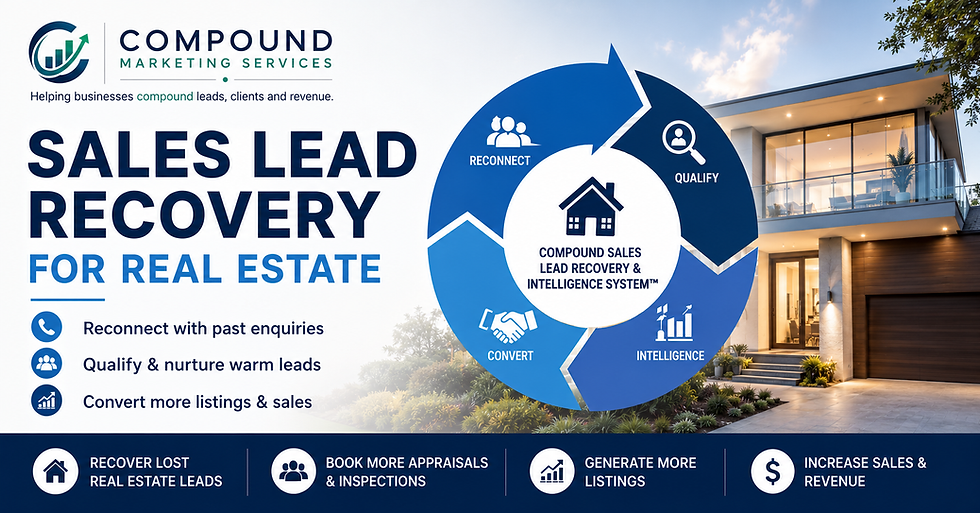
Compound Marketing Services specialises in helping real estate businesses recover and reactivate sales leads. By treating your CRM database as a vital business asset and applying structured follow-up strategies, your agency can uncover opportunities that others overlook. Start viewing your old leads as future clients waiting for the right moment to engage.
If you are interested in exploring how we can assist your Real Estate Agency contact us today!

Comments